

Pain, stiffness, weakness, and difficulty with movement can affect almost every part of daily life. A backache can make sitting at work uncomfortable, knee pain can make climbing stairs difficult, and a sports injury can keep you away from the activities you enjoy. Recovery after surgery may also require structured rehabilitation before you can confidently return to your normal routine.
Choosing the right physiotherapy clinic in Faridabad can therefore be an important step toward improving mobility, managing pain, rebuilding strength, and supporting recovery.
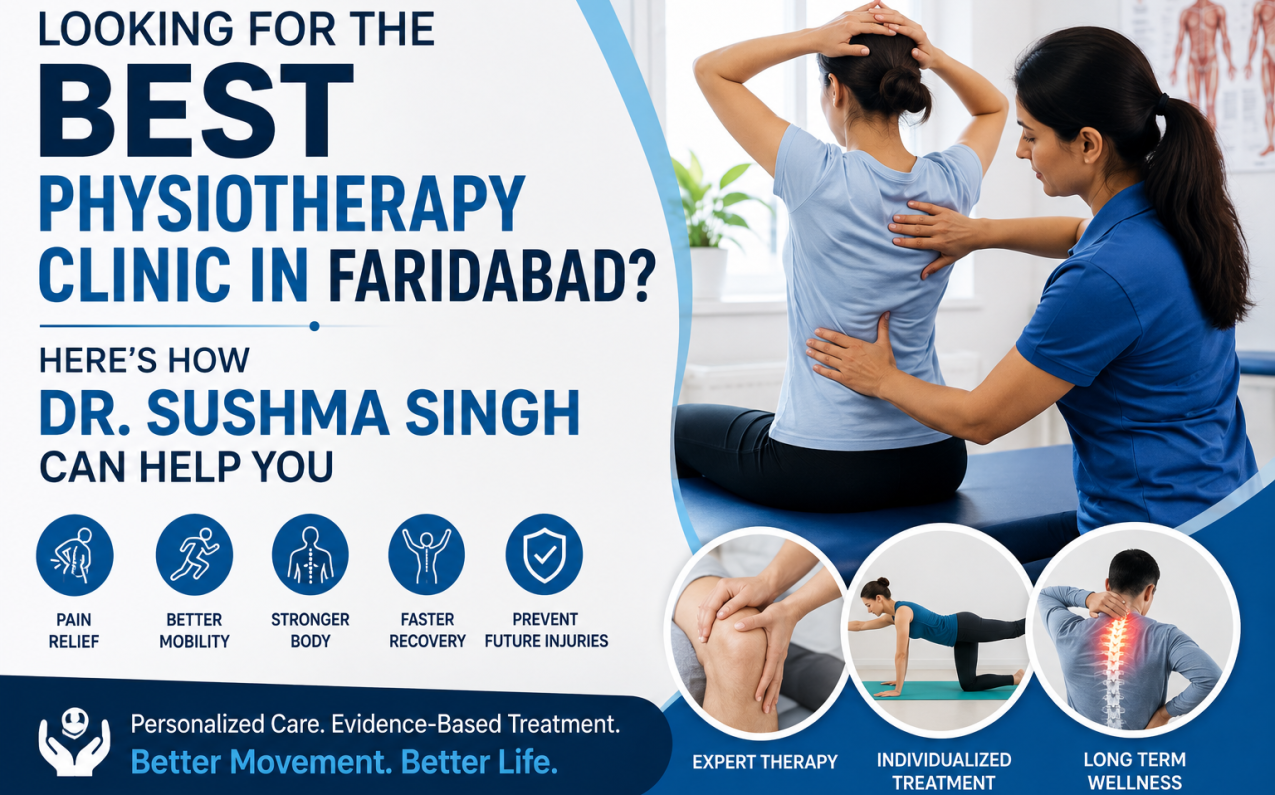
If you are searching for a best physiotherapy clinic in Faridabad, it is important to look beyond promotional claims and consider factors such as professional assessment, personalized treatment, rehabilitation expertise, patient education, and a treatment plan suited to your individual condition.
MBM Physiotherapy in Faridabad provides physiotherapy and rehabilitation services for a range of musculoskeletal, orthopedic, neurological, spinal, sports-related, and women’s health conditions. Dr. Sushma Singh follows a personalized approach to physiotherapy, helping patients understand their condition and work progressively toward their functional goals.
This guide explains what to look for when choosing a physiotherapy clinic and how Dr. Sushma Singh at MBM Physiotherapy can support your rehabilitation journey.
What Does a Physiotherapist Do?
Physiotherapy is a healthcare profession focused on helping people improve movement, physical function, strength, flexibility, balance, and mobility.
A physiotherapist may work with patients experiencing:
- Back and neck pain
- Joint pain
- Muscle injuries
- Sports injuries
- Fractures
- Post-surgical limitations
- Neurological conditions
- Mobility problems
- Postural issues
- Age-related physical limitations
- Pregnancy and post-pregnancy physical concerns
Treatment is not necessarily limited to hands-on therapy. Depending on the condition, a physiotherapy program may include therapeutic exercises, manual therapy, mobility training, strengthening, balance exercises, postural education, functional training, and home exercises.
The specific treatment should always be based on an appropriate assessment.
Why Choosing the Right Physiotherapy Clinic Matters
Physiotherapy is not a one-size-fits-all treatment.
For example, two people may both complain of knee pain but have completely different underlying problems. One person may be recovering from surgery, another may have a sports injury, while another may experience pain associated with long-term joint changes.
Their rehabilitation programs should therefore be different.
A good physiotherapy clinic should focus on understanding:
- Your symptoms
- Your medical history
- Your physical limitations
- Your lifestyle
- Your activity level
- Your treatment goals
- Your recovery progress
This allows physiotherapy to become a structured process rather than simply a collection of exercises.
What to Look for in the Best Physiotherapy Clinic in Faridabad
When researching a physiotherapy clinic in Faridabad, consider the following factors.
1. Professional Assessment
Treatment should begin with an appropriate assessment rather than immediately prescribing exercises.
An assessment may consider:
- Range of motion
- Muscle strength
- Flexibility
- Posture
- Balance
- Walking pattern
- Joint movement
- Functional limitations
- Pain characteristics
This information can help the physiotherapist develop a suitable rehabilitation plan.
2. Personalized Treatment Plans
Every patient’s body, lifestyle, medical history, and recovery goals are different.
A personalized treatment program can be adjusted according to your progress.
For example, rehabilitation after knee replacement may involve mobility and walking exercises initially, followed by progressive strengthening and functional activities.
Sports injury rehabilitation may instead focus on strength, balance, coordination, agility, and gradual return to sport.
3. Comprehensive Rehabilitation Services
A physiotherapy clinic should ideally be able to address different stages of recovery.
At MBM Physiotherapy, rehabilitation services include areas such as:
- Orthopedic Rehabilitation
- Spinal Rehabilitation
- Sports Injury Rehabilitation
- Neurological Rehabilitation
- Geriatric Rehabilitation
- Musculoskeletal Rehabilitation
- Chronic Pain Management
- Manual Therapy
- Postural Assessment & Training
- Pre- and Post-Surgery Rehabilitation
- Oncology Rehabilitation
- Pre- and Post-Pregnancy Exercises
This allows treatment to be tailored to the individual’s rehabilitation requirements.
How Dr. Sushma Singh Can Help
Dr. Sushma Singh at MBM Physiotherapy, Faridabad, focuses on individualized physiotherapy and rehabilitation.
The first step is understanding the patient’s problem rather than simply treating the location where pain is felt.
For example, a patient with shoulder pain may also have limitations in upper-back mobility or weakness affecting shoulder movement. Similarly, someone with recurring ankle injuries may require balance and movement training in addition to treatment for the immediate injury.
By considering the broader movement pattern, physiotherapy can address factors that may contribute to functional limitations.
Physiotherapy for Back and Spine Problems
Back pain is one of the most common reasons people seek physiotherapy.
Spinal rehabilitation may be appropriate for certain patients experiencing:
- Lower back pain
- Neck pain
- Spinal stiffness
- Sciatica symptoms
- Disc-related problems
- Postural problems
- Spinal injuries
- Recovery after spinal surgery
Treatment may include therapeutic exercises, mobility work, strengthening, postural education, manual therapy where appropriate, and functional rehabilitation.
The objective is to help patients improve their ability to move and perform everyday activities safely.
Orthopedic Physiotherapy and Rehabilitation
Orthopedic rehabilitation focuses on conditions affecting the bones, joints, muscles, ligaments, tendons, and other musculoskeletal structures.
Patients may require physiotherapy following:
- Fractures
- Joint injuries
- Knee problems
- Shoulder conditions
- Hip problems
- Joint replacement
- Ligament injuries
- Muscle injuries
- Orthopedic surgery
Rehabilitation may help restore mobility, strength, flexibility, balance, and functional independence.
For patients recovering from surgery, the program should be coordinated with the surgeon’s recommendations and individual healing stage.
Sports Injury Rehabilitation
Sports injuries can happen to professional athletes as well as people who exercise recreationally.
Common examples include:
- Ankle sprains
- Muscle strains
- Ligament injuries
- Knee injuries
- ACL injuries
- Shoulder injuries
- Tennis elbow
- Achilles tendon problems
- Hamstring injuries
Sports rehabilitation generally involves progressive recovery rather than simply waiting for pain to disappear.
A rehabilitation program may progress from basic mobility and strength exercises to functional and sport-specific movements.
The goal is to help the athlete regain physical capacity and confidence before returning to demanding activities.
Neurological Rehabilitation
Neurological conditions can affect movement, balance, coordination, strength, and independence.
Physiotherapy may form an important component of rehabilitation for certain neurological conditions, including:
- Stroke
- Parkinson’s disease
- Spinal cord injuries
- Brain injuries
- Multiple sclerosis
- Other conditions affecting movement and function
Neurological rehabilitation may involve:
- Balance training
- Gait training
- Mobility exercises
- Strengthening
- Coordination exercises
- Functional training
Treatment is adapted according to the patient’s abilities and goals.
Geriatric Rehabilitation for Older Adults
Ageing can be accompanied by changes in strength, balance, flexibility, and mobility.
Older adults may benefit from physiotherapy when dealing with:
- Reduced mobility
- Joint pain
- Balance problems
- Weakness
- Recovery after surgery
- Arthritis
- Difficulty walking
- Risk of falls
Geriatric rehabilitation aims to support independence and safe movement.
Exercise programs can focus on strength, balance, flexibility, gait, and functional activities.
Chronic Pain Management
Living with persistent pain can affect physical activity, sleep, work, and quality of life.
Chronic pain management through physiotherapy may involve a combination of:
- Appropriate therapeutic exercises
- Mobility training
- Strengthening
- Manual therapy where suitable
- Postural education
- Activity modification
- Functional rehabilitation
The objective is to improve physical capacity and help patients manage their condition more effectively.
Persistent or unexplained pain should be medically evaluated to determine its cause.
Manual Therapy by Experts
Manual therapy involves hands-on techniques that may be used to address certain musculoskeletal problems.
Depending on the patient’s assessment, treatment may include techniques aimed at:
- Improving joint mobility
- Reducing muscle tension
- Improving soft-tissue mobility
- Supporting comfortable movement
Manual therapy is often most useful when combined with active rehabilitation rather than being the only component of treatment.
Postural Assessment and Training
Poor movement habits and prolonged sitting can contribute to discomfort and physical limitations in some individuals.
Postural Assessment & Training may evaluate:
- Sitting posture
- Standing posture
- Head and neck alignment
- Shoulder position
- Pelvic alignment
- Movement patterns
Patients may receive guidance on posture, workplace ergonomics, mobility exercises, strengthening, and movement habits.
The goal is not to maintain one rigid posture all day, but to develop healthier movement habits and avoid prolonged positions that aggravate symptoms.
Pre- and Post-Surgery Rehabilitation
Physiotherapy can be valuable both before and after certain surgeries.
Before Surgery
Pre-surgery rehabilitation, sometimes called prehabilitation, may help patients prepare physically for an upcoming procedure.
Depending on the condition, it may focus on:
- Strength
- Mobility
- Exercise tolerance
- Education
- Functional preparation
After Surgery
Post-surgery rehabilitation can help patients gradually regain:
- Mobility
- Strength
- Balance
- Walking ability
- Functional independence
The rehabilitation program depends on the type of surgery and should respect the surgeon’s precautions.
Pre- and Post-Pregnancy Physiotherapy
Pregnancy can cause significant physical changes, including changes in posture, body mechanics, muscle function, and pelvic-floor demands.
Appropriate physiotherapy guidance may help women work on:
- Mobility
- Strength
- Postural awareness
- Pelvic-floor function
- Comfortable movement
- Preparation for physical demands of motherhood
After delivery, rehabilitation can focus on gradually rebuilding strength and functional capacity.
Exercise recommendations should be individualized according to pregnancy stage, delivery history, medical considerations, and professional advice.
Oncology Rehabilitation
Cancer treatment can sometimes affect strength, mobility, endurance, balance, and overall physical function.
Oncology rehabilitation is designed to support appropriate physical activity and functional recovery during or after cancer treatment.
Depending on the individual’s medical condition, physiotherapy may address:
- Reduced strength
- Fatigue-related limitations
- Mobility
- Balance
- Functional independence
- Recovery following surgery
Oncology rehabilitation should be coordinated with the patient’s oncology and medical care team.
What Happens During a Physiotherapy Session?
A typical physiotherapy journey may involve several stages.
Step 1: Initial Consultation
The physiotherapist discusses your symptoms, medical history, lifestyle, and goals.
Step 2: Physical Assessment
Your movement, strength, mobility, balance, and functional abilities may be assessed.
Step 3: Treatment Planning
A personalized rehabilitation program is developed according to your condition.
Step 4: Treatment
Treatment may involve therapeutic exercises, manual techniques, mobility training, strengthening, and other appropriate approaches.
Step 5: Home Exercise Guidance
You may receive exercises or activity recommendations to continue your rehabilitation outside the clinic.
Step 6: Progress Assessment
Your progress can be reviewed and exercises modified as your condition changes.
Why Personalized Physiotherapy Is Important
One of the biggest advantages of professional physiotherapy is that treatment can evolve as you recover.
For example, an exercise that is appropriate during the early stage of rehabilitation may become too easy later.
Progressive rehabilitation can gradually increase:
- Resistance
- Repetitions
- Range of motion
- Balance challenges
- Functional complexity
- Activity demands
This helps ensure that rehabilitation continues to challenge the body appropriately.
When Should You Visit a Physiotherapist?
Consider consulting a physiotherapist if you have:
- Persistent muscle or joint pain
- Difficulty moving a joint
- Reduced strength
- Recurring sports injuries
- Back or neck pain
- Difficulty walking
- Balance problems
- Recovery limitations after surgery
- Postural concerns
- Reduced physical activity because of pain
You do not necessarily have to wait until pain becomes severe before seeking professional advice.
Early assessment may help identify movement limitations and determine whether physiotherapy is appropriate.
Why MBM Physiotherapy in Faridabad?
For people searching for a physiotherapy clinic in Faridabad, MBM Physiotherapy aims to provide personalized rehabilitation in a patient-focused environment.
The approach emphasizes:
Individual Attention
Treatment plans are designed according to the patient’s condition and goals.
Comprehensive Services
Multiple rehabilitation specialties allow patients to receive care appropriate to their specific needs.
Progressive Exercise
Rehabilitation can be progressed as mobility, strength, and function improve.
Patient Education
Understanding your condition and learning appropriate exercises can help you participate actively in recovery.
Functional Goals
Treatment focuses not only on symptoms but also on improving everyday movement and physical independence.
How to Get Better Results from Physiotherapy
Your participation can make an important difference to your rehabilitation.
Follow Your Exercise Program
Consistency is important. Perform prescribed exercises according to your physiotherapist’s instructions.
Communicate About Pain
Tell your physiotherapist if an exercise causes unusual or excessive pain.
Avoid Overdoing Exercise
More exercise is not always better. Rehabilitation should progress appropriately.
Stay Active Within Your Limits
Appropriate physical activity can support general health and physical conditioning.
Attend Follow-Up Sessions
Regular reassessment helps determine whether your rehabilitation program needs modification.
Frequently Asked Questions
How do I choose the best physiotherapy clinic in Faridabad?
Look for a qualified professional, appropriate assessment, personalized treatment plans, relevant rehabilitation experience, good patient communication, and services suited to your condition.
Can physiotherapy help with back pain?
Physiotherapy can help many people with certain types of back pain by addressing mobility, strength, movement patterns, and functional limitations. The appropriate approach depends on the underlying cause.
Is physiotherapy useful after surgery?
Yes, physiotherapy is commonly used as part of rehabilitation following many orthopedic and other surgeries, subject to the treating surgeon’s recommendations.
How many physiotherapy sessions will I need?
There is no universal number. It depends on your condition, severity, goals, response to treatment, and progress.
Can physiotherapy prevent sports injuries?
A suitable strength, mobility, balance, and movement program may help address modifiable risk factors and support injury prevention.
Is manual therapy enough for recovery?
Manual therapy may be useful for some conditions, but active rehabilitation and appropriate exercises are often important components of long-term recovery.
Can older adults undergo physiotherapy?
Yes. Physiotherapy can help older adults work on strength, balance, mobility, walking, and functional independence.
Conclusion
Finding the best physiotherapy clinic in Faridabad should be about more than simply choosing a clinic based on a promotional claim. The right choice should involve professional assessment, personalized treatment, appropriate rehabilitation techniques, clear communication, and a focus on your individual recovery goals.
At MBM Physiotherapy, Faridabad, Dr. Sushma Singh provides personalized physiotherapy and rehabilitation for a wide range of conditions, including orthopedic problems, spinal conditions, sports injuries, neurological disorders, chronic pain, post-surgical recovery, geriatric concerns, postural problems, and women’s health needs.
Whether you are dealing with back pain, recovering from an injury, preparing for surgery, rebuilding strength after surgery, or trying to improve your mobility, an individualized physiotherapy program can help you work toward better physical function.
Rather than relying on a generic exercise routine, consider getting your condition properly assessed and following a rehabilitation program designed around your needs.
MBM Physiotherapy in Faridabad is committed to helping patients move better, build strength, improve physical function, and work toward a more active lifestyle through personalized physiotherapy and rehabilitation.