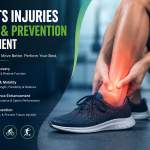


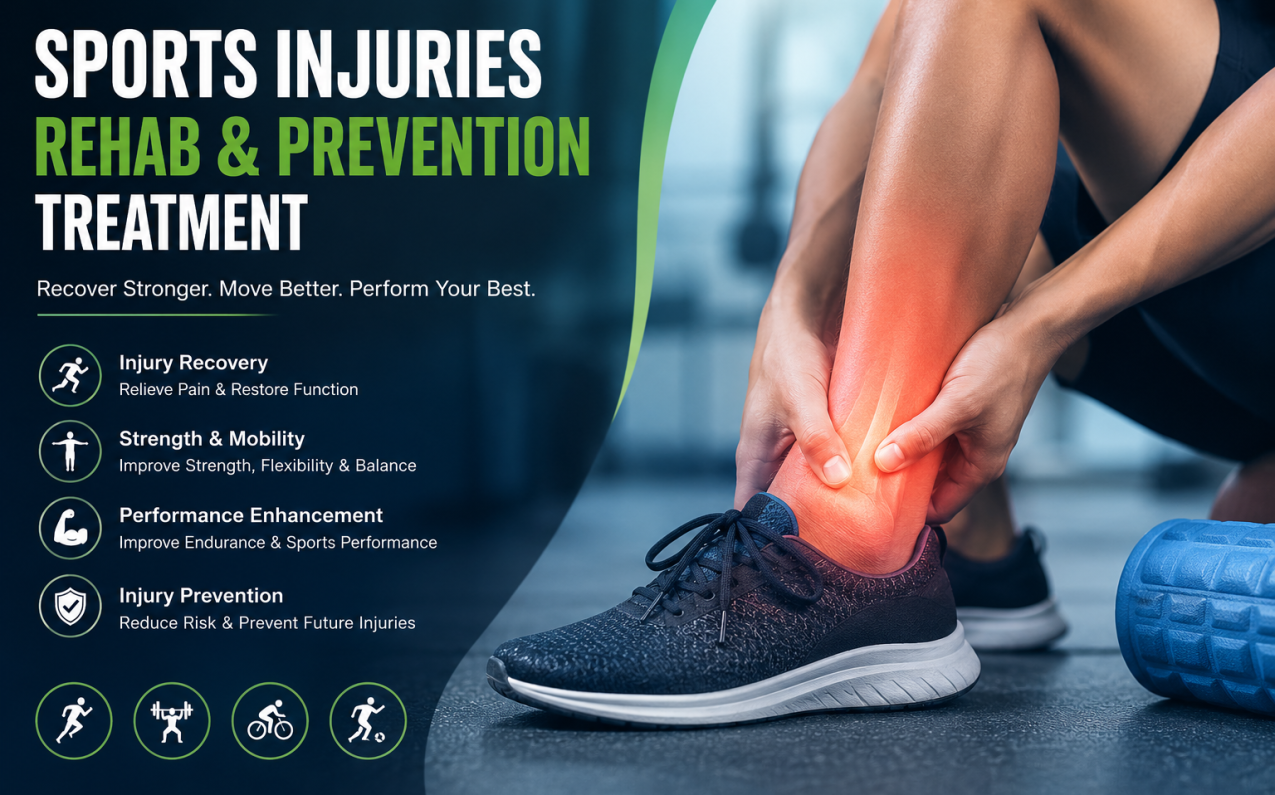
Sports and physical activities are excellent for maintaining strength, fitness, flexibility, and overall well-being. However, repetitive movements, sudden changes in direction, falls, poor training techniques, inadequate warm-up, and overuse can sometimes result in sports injuries.
Whether you are a professional athlete, a regular gym-goer, a recreational player, or someone who enjoys running and fitness activities, an injury can affect your mobility and prevent you from participating in the activities you love.
The good news is that appropriate physiotherapy and rehabilitation can support recovery, restore movement, rebuild strength, and help reduce the risk of future injuries.
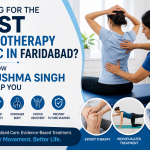
MBM Physiotherapy in Faridabad, Haryana provides specialized Sports Injuries Rehab & Prevention services designed around the individual needs of each patient. Under the guidance of Dr. Sushma Singh, patients can receive personalized rehabilitation programs focused on pain management, mobility, strength, flexibility, balance, functional movement, and a safe return to sports and daily activities.
In this guide, we will explore common sports injuries, how rehabilitation works, the importance of injury prevention, and how professional physiotherapy can support your recovery journey.
What Are Sports Injuries?
Sports injuries are physical injuries that occur during sports, exercise, workouts, or other physical activities. They can affect muscles, tendons, ligaments, joints, bones, and other soft tissues.
Some injuries happen suddenly, while others develop gradually because of repetitive stress or overuse.
Common causes include:
- Sudden twisting or turning
- Falls or collisions
- Overtraining
- Poor exercise technique
- Inadequate warm-up
- Muscle weakness
- Limited flexibility
- Poor balance
- Incorrect footwear
- Repetitive movements
- Returning to sport too quickly after an injury
Early assessment and appropriate rehabilitation can help prevent a minor injury from becoming a long-term problem.
Common Sports Injuries Treated with Physiotherapy
At MBM Physiotherapy, rehabilitation programs may be designed for a variety of sports and activity-related conditions.
1. Ankle Sprains
Ankle sprains commonly occur when the foot twists or rolls unexpectedly. They can cause pain, swelling, bruising, and difficulty walking.
Physiotherapy can focus on:
- Reducing pain and swelling
- Restoring ankle mobility
- Improving balance
- Strengthening supporting muscles
- Preventing recurrent sprains
2. Knee Injuries
Knee injuries are common among runners, football players, badminton players, gym enthusiasts, and other athletes.
Common knee problems include:
- Ligament injuries
- Meniscus injuries
- Patellofemoral pain
- Muscle strains
- Overuse injuries
Rehabilitation focuses on restoring knee movement, strengthening the muscles around the knee, improving balance, and gradually returning the individual to functional activities.
3. ACL Injuries
The anterior cruciate ligament (ACL) plays an important role in knee stability. ACL injuries are particularly common in sports involving jumping, pivoting, and sudden changes of direction.
A structured ACL rehabilitation program can include:
- Range-of-motion exercises
- Muscle activation
- Progressive strengthening
- Balance training
- Functional movement training
- Sport-specific exercises
- Return-to-sport preparation
The rehabilitation timeline depends on the severity of the injury and whether surgery has been performed.
4. Muscle Strains
Muscle strains can affect the hamstrings, quadriceps, calves, shoulders, and other muscle groups.
They may occur because of sudden force, excessive stretching, fatigue, or inadequate preparation.
Physiotherapy can help restore flexibility and strength while progressively preparing the affected muscle for normal activity.
5. Tennis Elbow and Golfer’s Elbow
Despite their names, these conditions are not limited to tennis or golf players.
They can develop from repetitive gripping, lifting, typing, or other activities.
Treatment may include:
- Pain management
- Manual therapy
- Stretching
- Strengthening
- Activity modification
- Ergonomic advice
6. Shoulder Injuries
Athletes involved in swimming, cricket, badminton, tennis, volleyball, and gym workouts may experience shoulder problems.
Common conditions include:
- Rotator cuff injuries
- Shoulder impingement
- Muscle strains
- Shoulder instability
Rehabilitation aims to improve shoulder mobility, strength, stability, and functional movement.
7. Achilles Tendon and Calf Injuries
Running and jumping activities can place significant stress on the Achilles tendon and calf muscles.
A rehabilitation program can gradually improve strength, flexibility, load tolerance, and movement control.
Why Sports Injury Rehabilitation Is Important
Rest alone may not always be enough to restore full function after an injury.
Without proper rehabilitation, an athlete may experience:
- Persistent pain
- Reduced strength
- Poor movement patterns
- Joint stiffness
- Reduced confidence
- Recurrent injuries
- Reduced sports performance
A structured rehabilitation program helps bridge the gap between injury and a safe return to activity.
Benefits of Sports Injury Physiotherapy
Pain Management
Physiotherapy can use appropriate techniques to help manage pain and improve comfort during recovery.
Improved Mobility
Injuries can restrict joint movement. Therapeutic exercises and manual techniques can help restore mobility.
Strength Recovery
Muscles may become weak following injury or reduced activity. Progressive strengthening helps rebuild capacity.
Better Balance and Coordination
Balance training can improve movement control and reduce the risk of future injuries.
Improved Flexibility
Appropriate stretching and mobility exercises can help restore flexibility and functional movement.
Return to Sport
A carefully progressed rehabilitation plan can help athletes gradually return to their sport rather than immediately returning to full activity.
What Does Sports Injury Rehabilitation Involve?
At MBM Physiotherapy, rehabilitation is based on the individual’s condition and goals.
Step 1: Assessment
The physiotherapist evaluates:
- Pain
- Range of motion
- Muscle strength
- Joint stability
- Balance
- Movement patterns
- Functional limitations
Step 2: Personalized Treatment Plan
Based on the assessment, a rehabilitation program is developed according to the patient’s condition, activity level, and recovery goals.
Step 3: Pain and Mobility Management
Early rehabilitation may focus on controlling symptoms and restoring comfortable movement.
Step 4: Progressive Strengthening
Exercises are gradually progressed to rebuild strength and endurance.
Step 5: Functional Training
Patients practice movements relevant to their daily activities or sport.
Step 6: Return-to-Sport Preparation
Athletes gradually perform sport-specific movements and exercises before returning to full activity.
Sports Injury Prevention: Why It Matters
Preventing an injury is often better than treating one.
Sports injury prevention involves identifying factors that may increase injury risk and addressing them before they become problematic.
Important prevention strategies include:
- Proper warm-up
- Regular strength training
- Flexibility and mobility exercises
- Balance training
- Correct exercise technique
- Adequate recovery
- Gradual training progression
- Appropriate footwear and equipment
- Proper hydration
- Listening to early warning signs
The Importance of Warm-Up
A proper warm-up prepares the body for physical activity.
It can include:
- Light cardiovascular activity
- Dynamic mobility exercises
- Sport-specific movements
- Gradual increases in intensity
A warm-up should be appropriate for the activity rather than simply performing random stretches.
Strength and Conditioning for Injury Prevention
Weakness in specific muscle groups can contribute to inefficient movement patterns.
Strength training can improve:
- Joint stability
- Muscle control
- Balance
- Power
- Functional capacity
Athletes should develop strength progressively and focus on the muscles and movement patterns relevant to their sport.
How Dr. Sushma Singh at MBM Physiotherapy Can Help
Recovering from a sports injury can be frustrating, especially when you want to return to your normal routine quickly.
Dr. Sushma Singh at MBM Physiotherapy, Faridabad focuses on individualized physiotherapy and rehabilitation programs designed around each patient’s condition and recovery objectives.
Depending on your assessment, your rehabilitation program may include:
- Therapeutic exercises
- Strengthening programs
- Mobility exercises
- Flexibility training
- Balance and coordination exercises
- Manual therapy
- Functional movement training
- Gait training where appropriate
- Sport-specific rehabilitation
- Injury prevention education
- Home exercise programs
The goal is not simply to reduce symptoms but to help restore functional movement and physical confidence.
Why Choose MBM Physiotherapy for Sports Injury Rehabilitation in Faridabad?
Choosing the right rehabilitation approach can make a significant difference to your recovery experience.
MBM Physiotherapy focuses on:
Personalized Care
Every patient has different needs. Rehabilitation programs are customized according to the individual’s condition, lifestyle, and goals.
Progressive Rehabilitation
Exercises are gradually progressed as strength, mobility, and function improve.
Patient Education
Understanding your injury and knowing how to manage it can help you become more confident during recovery.
Injury Prevention
Rehabilitation doesn’t stop at pain relief. Appropriate exercises and movement training can help reduce the likelihood of future injuries.
Functional Recovery
The ultimate objective is to help you safely return to everyday activities, exercise, work, or sport.
When Should You See a Physiotherapist for a Sports Injury?
Consider seeking professional assessment if you experience:
- Persistent pain
- Significant swelling
- Difficulty walking
- Reduced joint movement
- Repeated injuries
- Muscle weakness
- Loss of balance
- Pain that returns whenever you exercise
- Difficulty returning to your previous activity level
Early professional assessment can help identify the underlying problem and establish an appropriate rehabilitation plan.
Can Physiotherapy Help Prevent Sports Injuries?
Yes. Physiotherapy is not only for people who are already injured.
A physiotherapist can assess movement, strength, flexibility, balance, and functional patterns to identify areas that may benefit from improvement.
Preventive programs can include:
- Strength and conditioning
- Mobility training
- Balance exercises
- Movement correction
- Sport-specific exercises
- Load management education
This approach can be particularly useful for athletes who frequently experience recurring injuries.
Returning to Sports After an Injury
Returning to sports should be gradual.
Being pain-free does not always mean that the body is ready for full sports activity. Strength, balance, endurance, coordination, and movement control may also need to be restored.
A physiotherapist can help you progress through different stages, such as:
Basic movement → Strength → Functional movement → Sport-specific training → Return to sport
The exact progression depends on the injury and individual recovery.
Frequently Asked Questions
How long does sports injury rehabilitation take?
Recovery time varies according to the type and severity of the injury, treatment requirements, and individual progress. Your physiotherapist can provide a more personalized recovery plan after assessment.
Can I exercise while recovering from a sports injury?
In many cases, appropriately modified exercise is an important part of rehabilitation. However, exercises should be selected according to your injury and recovery stage.
Is physiotherapy useful after sports surgery?
Yes. Physiotherapy is commonly an important part of rehabilitation following orthopedic sports surgeries. Your rehabilitation should follow the guidance of your surgeon and physiotherapist.
Can physiotherapy prevent recurrent sports injuries?
A properly designed rehabilitation and injury-prevention program can address strength, mobility, balance, movement control, and other modifiable factors associated with injury risk.
Do I need physiotherapy even if my pain has improved?
Pain improvement is encouraging, but full recovery may also require restoring strength, mobility, coordination, and functional capacity.
Conclusion
Sports injuries can interrupt training, work, exercise, and everyday life. However, with appropriate assessment and structured rehabilitation, many people can gradually restore movement, strength, confidence, and function.
Sports Injuries Rehab & Prevention at MBM Physiotherapy, Faridabad, Haryana, is focused on helping individuals recover through personalized physiotherapy, therapeutic exercises, progressive strengthening, mobility training, functional rehabilitation, and injury-prevention strategies.
Dr. Sushma Singh at MBM Physiotherapy can help you understand your condition, develop an individualized rehabilitation plan, and guide you through the recovery process.
Whether you are recovering from a knee injury, ankle sprain, muscle strain, ligament injury, shoulder problem, or another sports-related condition, professional rehabilitation can help you move toward a safer and more confident return to activity.
If pain or movement limitations are affecting your ability to exercise or participate in sports, consider getting a professional physiotherapy assessment rather than continuing to push through the symptoms.
Move better. Recover stronger. Return to the activities you enjoy with confidence.
Recovery time varies according to the type and severity of the injury, treatment requirements, and individual progress. Your physiotherapist can provide a more personalized recovery plan after assessment.
In many cases, appropriately modified exercise is an important part of rehabilitation. However, exercises should be selected according to your injury and recovery stage.
Yes. Physiotherapy is commonly an important part of rehabilitation following orthopedic sports surgeries. Your rehabilitation should follow the guidance of your surgeon and physiotherapist.
A properly designed rehabilitation and injury-prevention program can address strength, mobility, balance, movement control, and other modifiable factors associated with injury risk.
Pain improvement is encouraging, but full recovery may also require restoring strength, mobility, coordination, and functional capacity.