
Pregnancy is one of the most beautiful journeys in a woman’s life, but it also brings remarkable physical, hormonal, and emotional changes. As your body adapts to support the growing baby, it experiences increased stress on the muscles, joints, spine, and pelvic floor. After childbirth, the body requires time, care, and structured rehabilitation to regain strength and function.
Many women experience back pain, pelvic discomfort, poor posture, muscle weakness, urinary leakage, abdominal separation, and fatigue during pregnancy and after delivery. The good news is that these challenges can often be managed safely through physiotherapy and guided exercise.
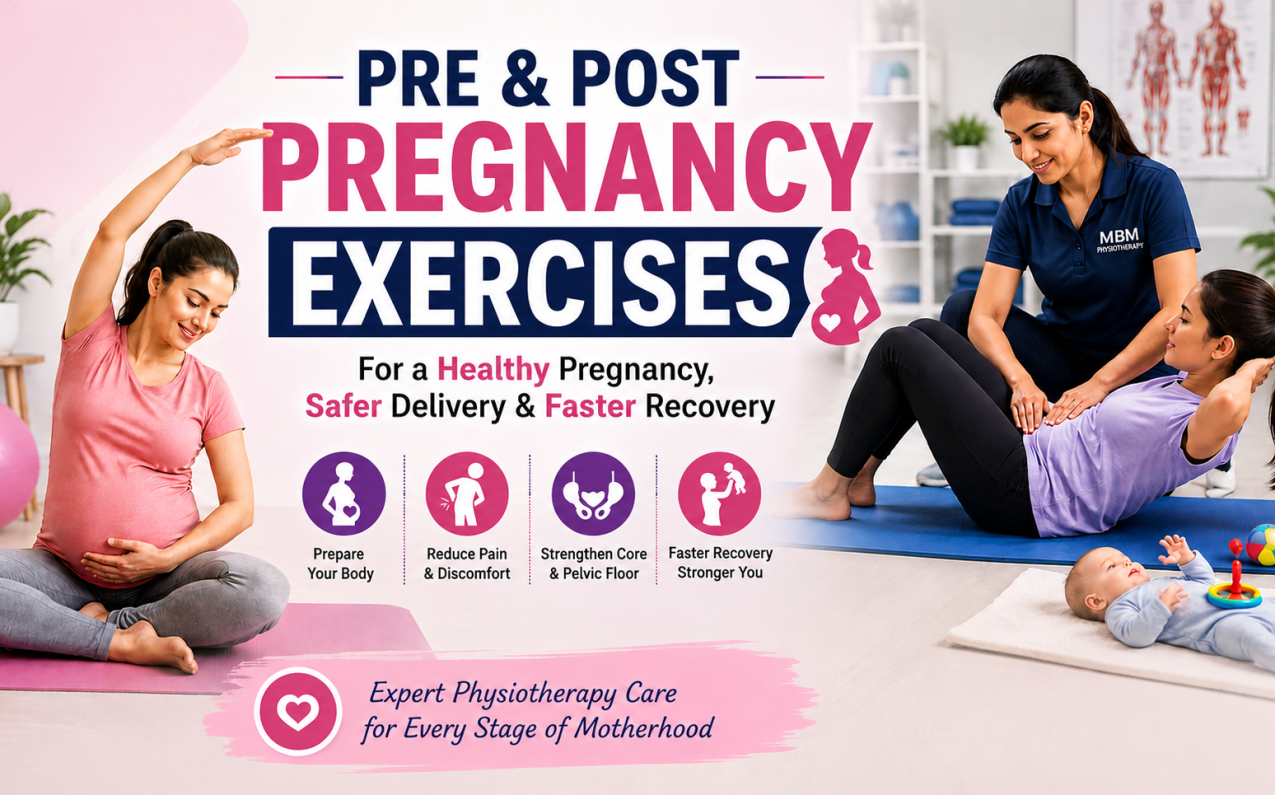
At MBM Physiotherapy, Dr. Sushma Singh provides specialized Pre and Post-Pregnancy Physiotherapy Programs designed to help women enjoy a healthier pregnancy, prepare for childbirth, and recover confidently after delivery. Every treatment plan is customized according to the mother’s health, trimester, delivery type, and recovery goals.
Whether you are planning a pregnancy, currently expecting, or have recently welcomed your baby, professional physiotherapy can make your motherhood journey safer, more comfortable, and more enjoyable.
Why Are Pregnancy Exercises Important?
During pregnancy, your body undergoes significant biomechanical changes:
- Weight gradually increases.
- Your center of gravity shifts.
- Hormonal changes loosen ligaments.
- Core muscles stretch.
- Pelvic floor muscles carry additional weight.
- Posture changes considerably.
Without proper guidance, these changes may lead to:
- Lower back pain
- Neck pain
- Hip pain
- Pelvic girdle pain
- Sciatica
- Swollen legs
- Muscle weakness
- Poor balance
- Reduced mobility
Regular physiotherapy exercises help your body adapt naturally while minimizing discomfort.
Benefits of Pre-Pregnancy and Prenatal Exercises
Prenatal physiotherapy offers numerous physical and mental health benefits.
1. Reduces Back Pain
As pregnancy progresses, extra body weight places greater pressure on the spine. Specific strengthening and stretching exercises reduce muscle tension and improve spinal support.
2. Improves Posture
Growing abdominal weight often causes rounded shoulders and excessive lower back curvature. Physiotherapy helps maintain proper alignment and posture.
3. Strengthens Core Muscles
A strong core provides better support to the spine, pelvis, and growing baby while reducing the risk of excessive abdominal separation.
4. Enhances Pelvic Floor Strength
Pelvic floor exercises improve bladder control, support the uterus, and prepare the muscles for labor and postpartum recovery.
5. Improves Flexibility
Gentle stretching keeps muscles flexible and joints mobile, making everyday activities more comfortable.
6. Increases Stamina
Better cardiovascular endurance and muscle strength prepare mothers for the physical demands of labor.
7. Reduces Swelling
Gentle movement improves blood circulation and decreases swelling in the legs and feet.
8. Improves Mental Well-being
Exercise stimulates endorphin production, reducing stress and promoting better sleep and emotional wellness.
Safe Exercises During Pregnancy
Every pregnancy is unique. At MBM Physiotherapy, exercise programs are carefully tailored to the mother’s trimester and medical condition.
Common prenatal exercises include:
- Walking
- Pelvic tilts
- Pelvic floor exercises (Kegels)
- Gentle stretching
- Breathing exercises
- Core stability training
- Hip mobility exercises
- Shoulder mobility exercises
- Balance training
- Modified strengthening exercises
These exercises are always performed under professional guidance to ensure the safety of both mother and baby.
Common Pregnancy Problems That Physiotherapy Can Help Manage
Dr. Sushma Singh frequently treats women experiencing:
- Pregnancy-related back pain
- Neck and shoulder pain
- Pelvic girdle pain
- Sciatica
- Hip pain
- Leg cramps
- Joint stiffness
- Muscle weakness
- Poor posture
- Difficulty walking
- Swelling
- Balance problems
Early physiotherapy intervention often prevents these issues from becoming severe.
Preparing for Childbirth
Physiotherapy is not only about reducing pain—it also prepares your body for labor.
At MBM Physiotherapy, labor preparation may include:
- Breathing techniques
- Pelvic mobility exercises
- Relaxation training
- Functional movement training
- Pelvic floor awareness
- Safe stretching
- Positioning techniques for labor
These techniques help mothers feel more confident and physically prepared for childbirth.
Why Postpartum Physiotherapy Is Essential
After delivery, the body needs structured rehabilitation to regain its strength.
Whether you have had a normal delivery or a Caesarean section, postpartum physiotherapy supports safe and effective recovery.
Many women experience:
- Abdominal weakness
- Lower back pain
- Pelvic pain
- Poor posture
- Neck pain from breastfeeding
- Diastasis Recti
- Pelvic floor weakness
- Urinary leakage
- Muscle tightness
- Reduced stamina
Professional physiotherapy addresses these concerns while promoting faster healing.
Post-Pregnancy Exercise Program
Dr. Sushma Singh develops customized rehabilitation programs that may include:
Core Strengthening
Gradual activation of abdominal muscles helps restore trunk stability.
Pelvic Floor Rehabilitation
Improves bladder control and supports pelvic organs.
Posture Correction
Reduces strain caused by lifting, feeding, and carrying the baby.
Scar Mobilization
For mothers recovering from Caesarean section, gentle scar management techniques improve tissue mobility and reduce discomfort.
Functional Training
Exercises are designed to help mothers safely return to everyday activities.
Stretching and Flexibility
Gentle stretching reduces stiffness and improves mobility.
Understanding Diastasis Recti
Diastasis Recti is the separation of abdominal muscles that commonly occurs during pregnancy.
Symptoms include:
- Bulging abdomen
- Weak core
- Back pain
- Poor posture
Improper exercises may worsen the condition.
Dr. Sushma Singh carefully assesses abdominal separation and prescribes evidence-based rehabilitation exercises to safely restore core strength.
Pelvic Floor Rehabilitation
Pelvic floor muscles play a vital role during pregnancy and after childbirth.
Weak pelvic floor muscles can lead to:
- Urinary leakage
- Pelvic heaviness
- Reduced core stability
- Sexual discomfort
Physiotherapy includes:
- Pelvic floor assessment
- Muscle activation training
- Functional strengthening
- Breathing coordination
- Progressive rehabilitation
Posture Matters More Than You Think
New mothers often spend hours:
- Breastfeeding
- Holding the baby
- Lifting
- Rocking
- Sleeping in awkward positions
Poor posture leads to chronic neck, shoulder, and upper back pain.
At MBM Physiotherapy, mothers learn proper body mechanics to prevent long-term musculoskeletal problems.
Personalized Care at MBM Physiotherapy
No two pregnancies are alike.
Dr. Sushma Singh performs a comprehensive assessment that considers:
- Medical history
- Pregnancy stage
- Pain levels
- Delivery method
- Fitness level
- Lifestyle
- Recovery goals
Every rehabilitation program is individually tailored for maximum safety and effectiveness.
Why Choose Dr. Sushma Singh?
Choosing the right physiotherapist during pregnancy and postpartum recovery is essential.
At MBM Physiotherapy, Dr. Sushma Singh is committed to providing compassionate, evidence-based care that focuses on the health and well-being of both mother and baby.
Patients trust her because she offers:
- Individualized treatment plans
- One-on-one physiotherapy sessions
- Evidence-based rehabilitation techniques
- Safe pregnancy exercise programs
- Advanced manual therapy when appropriate
- Patient education and home exercise guidance
- Continuous progress monitoring
- A caring and supportive approach
Her goal is not just pain relief—it is helping every mother regain strength, confidence, mobility, and independence.
Why Choose MBM Physiotherapy?
MBM Physiotherapy provides a modern and patient-focused environment where women receive comprehensive prenatal and postpartum care.
Our clinic offers:
- Specialized Women’s Health Physiotherapy
- Personalized Exercise Programs
- Advanced Rehabilitation Techniques
- Modern Treatment Facilities
- Friendly and Experienced Team
- Holistic Recovery Approach
- Comfortable Clinical Environment
- Individual Attention During Every Session
Frequently Asked Questions
Is physiotherapy safe during pregnancy?
Yes. When supervised by a qualified physiotherapist, pregnancy exercises are safe and highly beneficial for most women.
When should I start prenatal physiotherapy?
You can begin after consulting your obstetrician, often from the first trimester if there are no medical contraindications.
When can I start exercising after delivery?
Recovery timelines vary depending on whether you had a vaginal delivery or Caesarean section. Dr. Sushma Singh will recommend the appropriate time based on your condition.
Can physiotherapy reduce labor pain?
While it cannot eliminate labor pain, physiotherapy helps prepare your body, improves endurance, and teaches breathing and positioning techniques that may make labor more manageable.
Conclusion
Pregnancy and motherhood are life-changing experiences that deserve expert care and support. A structured physiotherapy program can reduce discomfort, improve strength, prepare your body for childbirth, and help you recover safely after delivery.
At MBM Physiotherapy, Dr. Sushma Singh is dedicated to helping mothers enjoy healthier pregnancies and smoother postpartum recovery through personalized, evidence-based physiotherapy care.
Whether you are expecting your first baby or recovering after childbirth, our team is here to guide you every step of the way.
Book your consultation with Dr. Sushma Singh at MBM Physiotherapy today and take the first step toward a healthier pregnancy, faster recovery, and lifelong wellness.